Python – Monte Carlo Simulation
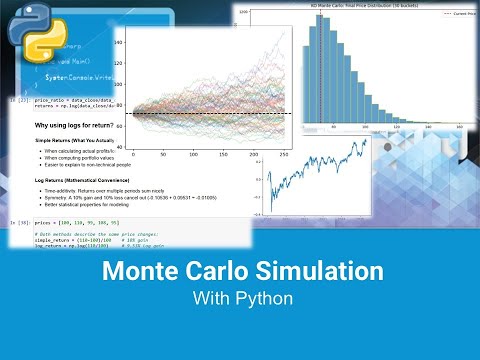
Python can be used for various tasks. One of these is Monte Carlo simulation for future stock analysis. In the video below this is exactly what is happening. 🙂

Instead of explaining the video and its code (available also in GitHub), I will concentrate on why it is better to use log returns than simple returns in stock analysis. Which is actually part of the video as well. Below are the 3 main reasons:
1. Time-Additivity
Log returns sum over time, making multi-period calculations effortless. A 10% gain followed by a 10% loss doesn’t cancel out with simple returns—but it nearly does with logs.
2. Symmetry Matters
A +10% and -10% return aren’t true inverses in simple terms. Logs fix this, ensuring consistent math for gains and losses.
3. Better for Modeling
Log returns follow a near-normal distribution, crucial for statistical models like Monte Carlo simulations.
When to Use Simple Returns?
-
For actual profit/loss calculations
-
When explaining performance to non-technical audiences
Code Highlights
log_return = np.log(110 / 100)  # 9.53% (not 10%)
simple_return = (110 - 100)/100 # 10% gain
The code forecasts 10K possible stock paths using log-based volatility: https://github.com/Vitosh/Python_personal/tree/master/YouTube/033_Python-Risk-analysis-with-Monte-Carlo
Enjoy!